Roman Galatia and the Temple of Augustus at Ankara: A Postcolonial Reading of the Monumentum Ancyranum
Title: Roman Galatia and the Temple of Augustus at Ankara: A Postcolonial Reading of the Monumentum Ancyranum
By Anna Sitz (University of Tübingen, Ancient History)
Date: Thursday, March 12, 2026
Time: 1730-1900
Room: Humanities Seminar Room (H-232)
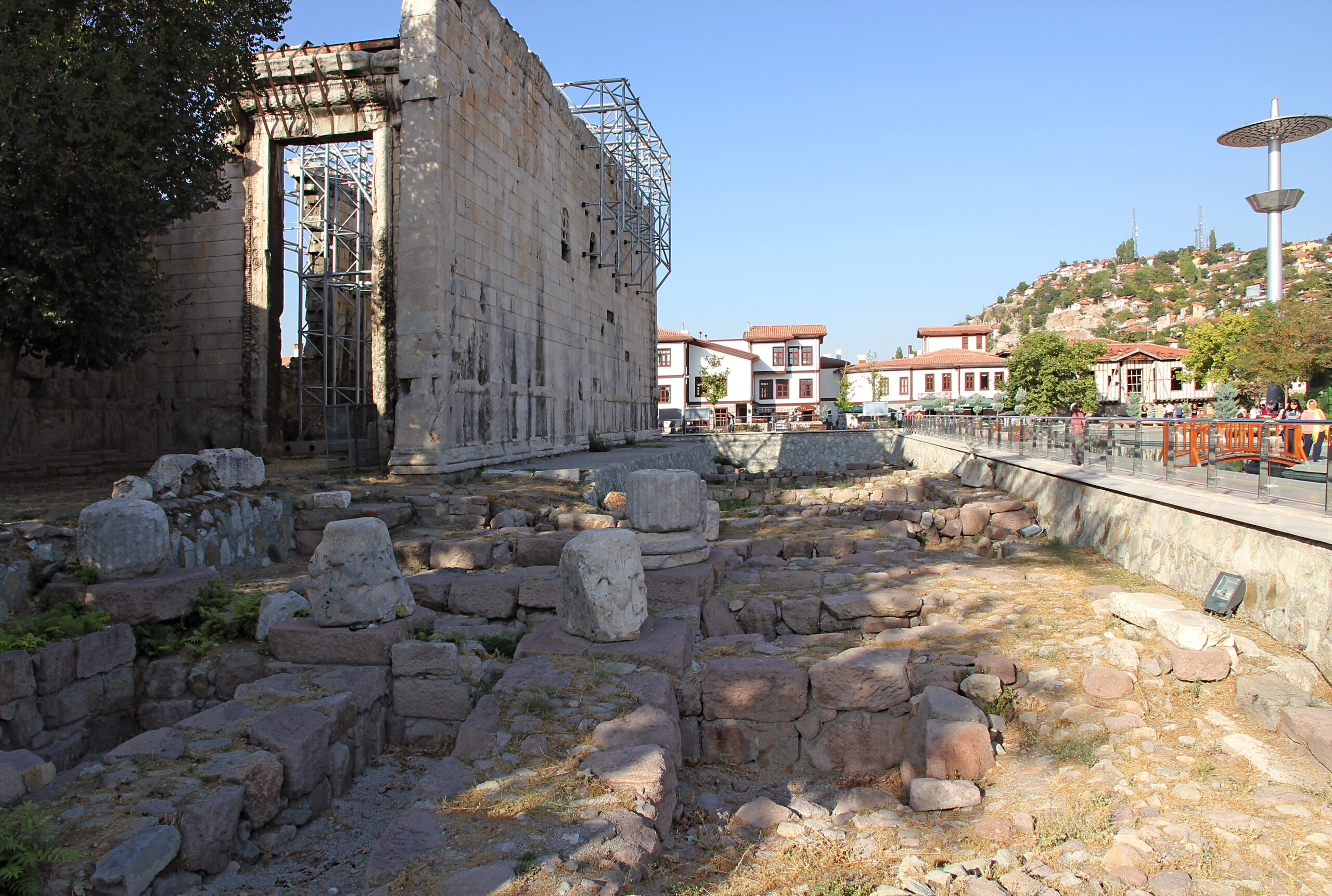
Abstract: The Temple of Augustus and Roma (recently dated by Altay Coşkun to ca 14 CE) in Ankara has traditionally been treated as an emblem of empire par excellence: the cult served the first Roman emperor and his family, while the text of the Res Gestae Divi Augusti (‘accomplishments of the divine Augustus’) on its walls was sent from the center (Rome) to the periphery (the provinces), impressing on provincial inhabitants the overwhelming might and wealth of the Roman emperor. What happens, however, when we question this one-way, center-periphery model of agency? In this talk, I take a postcolonial reading of the Temple of Augustus, returning agency to the Galatian (Celtic) elites who were likely responsible for the construction of the temple and the decision to display the Res Gestae at Ankara. Building on the research of Christina Kokkinia, Karl Strobel, and others through a close consideration of the architectural tradition of inscribed temples in Hellenistic and Roman Anatolia, I investigate what the monumentum ancyranum tells us, not about the Rome of Augustus, but about early Roman Galatia.
About the speaker: Anna Sitz (PhD, University of Pennsylvania, 2017) is an archaeologist from the US with field experience in Türkiye (especially Karia) since 2011 at sites such as Alabanda, Labraunda, and Phoenix. Her research topics include: material culture approaches to Greek inscriptions; building practices such as spoliation; funerary archaeology of non-elite graves; rural lifeways. While her specialization is in late antiquity (fourth to seventh centuries CE), fieldwork finds are turning her interest toward both earlier and later periods. She is currently employed as a postdoctoral researcher at the Universität Tübingen in the Seminar für Alte Geschichte. Her research has appeared in journals such as the American Journal of Archaeology, and her first monograph, Pagan Inscriptions, Christian Viewers: The Afterlives of Temples and Their Texts in the Late Antique Eastern Mediterranean (Oxford University Press, 2023), was awarded the First Book Award of the Classical Association of the Middle West and South (USA).
Organized by the Department of Archaeology
Organizer