Reframing a City on the Roman Eastern Frontier
Memorial Lecture for Julian Bennett
Title: Reframing a City on the Roman Eastern Frontier: Recent Work at Zeugma
By Prof. Kutalmış Görkay (Director of Excavations, Zeugma)
Date: Thursday, January 29, 2026
Time: 1730-1900
Room: C-Block Amphi
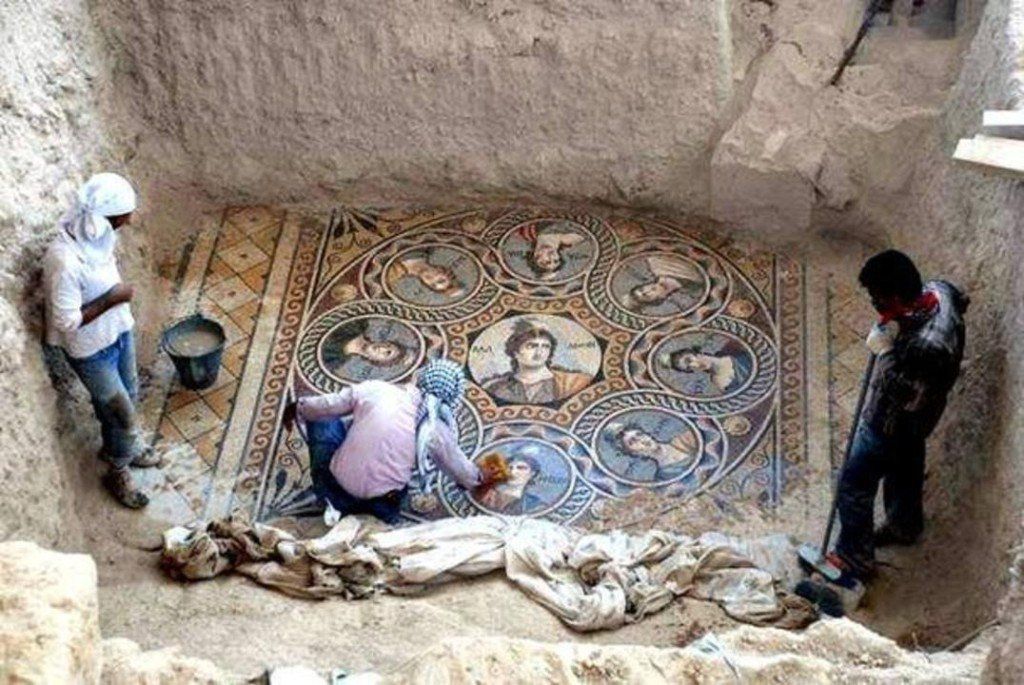
Abstract: Located in south-eastern Turkey, Zeugma (“bridge” or “crossing” in Greek) occupied a key crossing point on the Euphrates River at the junction of major east–west and north–south trade routes. The name refers to twin Hellenistic settlements founded around 300 BC by Seleucus I Nicator: Seleucia on the western bank and Apamea on the eastern bank. Incorporated into the Kingdom of Commagene by Pompey, Zeugma later became a major eastern frontier city of the Roman Empire. In the first century AD, the presence of Legio X Fretensis and Legio IV Scythica enhanced its strategic and cosmopolitan character. The city hosted a highly diverse population, including Greco-Macedonian settlers, indigenous groups, Semitic communities, merchants, and Roman military and administrative personnel. Zeugma therefore offers a valuable context for studying cultural interaction and hybridisation. This talk will focus primarily on recent research concerning the main sanctuary at Belkıs Tepe, the military installations, domestic architecture, and the necropoleis of the ancient city.
About the speaker: Professor Kutalmış Görkay is a classical archaeologist specialising in Greek and Roman archaeology, with a focus on urbanism, material culture, and frontier studies in Asia Minor. Educated at Ankara University, he has conducted the Zeugma (Commagene) Excavations since 2005. His fieldwork also includes Aphrodisias, Arykanda, Alexandria Troas, Erythrai, and Ankyra. Prof. Görkay has held visiting and research positions at the University of Oxford, Harvard University, the CNRS in Bordeaux, and German institutions as an Alexander von Humboldt Fellow. He is the founding President of the Turkish Institute of Archaeology and Cultural Heritage, and his research centres on cultural interaction and hybridity in frontier societies.
Organized by the Department of Archaeology
Organizer