Cappadocia as Archaeological Laboratory: Rock-Cut Practices and Rural Landscapes
Title: Cappadocia as Archaeological Laboratory: Rock-Cut Practices and Rural Landscapes
By Anaïs Lamesa (University of Edinburgh, Archaeology)
Date: Monday, March 9, 2026
Time: 1730-1900
Room: Humanities Seminar Room (H-232)
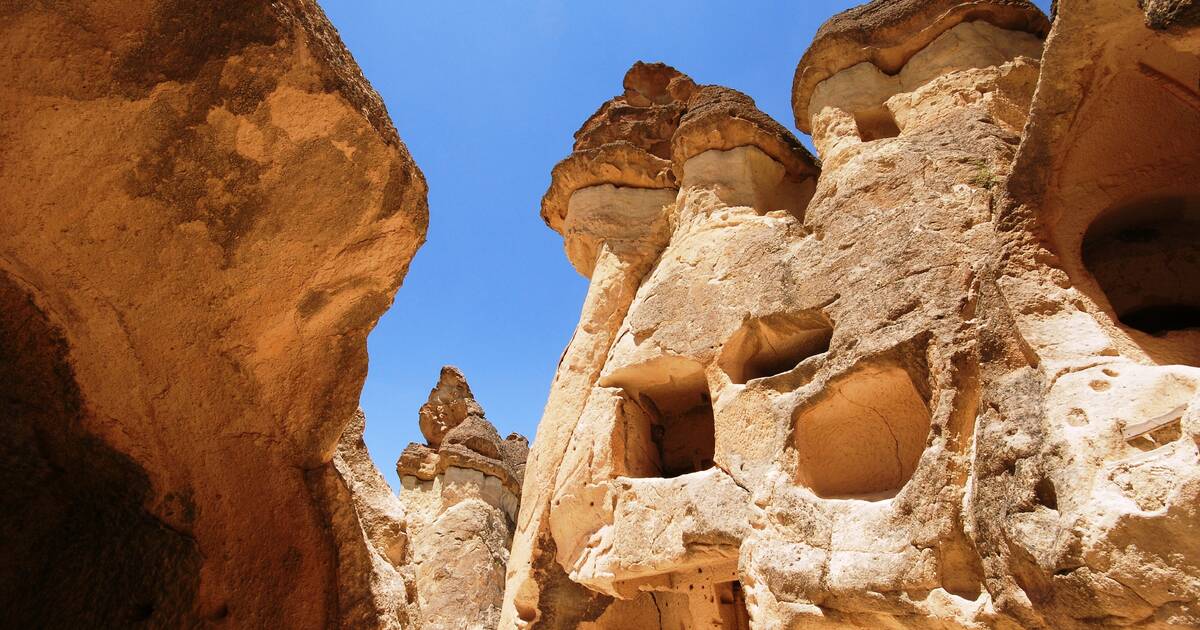
Abstract: This lecture presents Cappadocia as a long-term archaeological laboratory for investigating how social practices, technical knowledge, and environmental conditions have shaped rock-cut landscapes from the Hellenistic to the Ottoman periods (3rd century BCE–15th century CE). Rather than treating carved monuments primarily as artistic or iconographic objects, the study approaches rock-cut architecture as a historical source in its own right, drawing on building archaeology, landscape archaeology, and the archaeology of techniques.Through methods such as traceology, 3D micro-modelling, GIS-based stratigraphic recording, and relational databases, the research reconstructs carving processes, workshop organisation, and phases of intervention. Variations in tools, gestures, and execution illuminate labour organisation, knowledge transmission, and changing systems of patronage. Rock-cut structures are also analysed as material records of long-term rural life. Their repeated adaptation – tombs converted into churches, churches into agricultural spaces, and earlier monuments reworked in Islamic contexts – reveals ongoing processes of reuse and reinterpretation. By integrating technical and spatial analysis, the study traces how carving practices shaped settlement patterns and territorial organisation. Cappadocia thus emerges as a dynamic landscape where craft, environment, and cultural identity interacted over more than a millennium.
About the speaker: Anaïs Lamesa is an archaeologist specialising in rock-cut structures, quarries, and associated craft practices. She studied art history, archaeology, and history at Paris-Sorbonne, where she earned her doctorate with research re-examining ancient and medieval definitions of Cappadocia and regional identity through textual and archaeological evidence. Her postdoctoral project, Troglopie, investigated rock-cut churches and craft practices in Eastern Tigray (Ethiopia). From 2022 to 2024, she headed the Archaeology Department at the French Institute for Anatolian Studies in Istanbul. She now leads a UKRI/MSCA-funded project with the University of Nevşehir, focusing on Güzelyurt and surrounding landscapes, exploring rock-cut construction processes, social dynamics, and contemporary cultural heritage significance.
Organized by the Department of Archaeology
Organizer